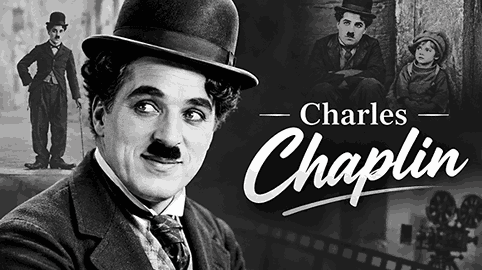
Picture a tiny man in a bowler hat, twirling a bamboo cane, and waddling down a dusty street in shoes three sizes too big. That single image is more recognizable than almost any logo on the planet. Charles Chaplin didn’t just make movies — he invented the language of modern comedy and built an empire that still generates millions today.
If you’ve been searching for the real story behind the mustache and the magic, you’re in the right place. Charles Chaplin remains one of the most Googled figures in film history, and his influence shows up everywhere from TikTok skits to billion-dollar studio deals. Let’s pull back the curtain on the man, the money, and the madness.
The Brutal Early Years: Poverty, Asylums, and a Stage Mother
Most people know Charles Chaplin as the smiling Tramp. Very few realize he grew up in conditions that would break most adults.
Born in South London in 1889, Charles Chaplin entered a world of crushing poverty. His mother, Hannah Chaplin, was a music hall singer whose voice began to fail. His father, Charles Chaplin Sr., was an alcoholic vocalist who drifted in and out of the family’s life before dying when young Charlie was just twelve.
By age seven, Charles Chaplin had already spent time in a workhouse — the Victorian equivalent of a homeless shelter for the destitute. His mother was eventually committed to a mental asylum, and Charlie and his half-brother Sydney were left to fend for themselves on the streets of Kennington.
But Hannah planted a seed that would change cinema forever. She used to sit by the window and act out scenes from the street below, performing characters for her boys. Charles Chaplin later said those impromptu shows were his first acting lessons. He never forgot them.
At nine years old, Charles Chaplin joined a clog-dancing troupe called The Eight Lancashire Lads. By fourteen, he was performing in West End theaters. The stage wasn’t a hobby — it was survival.
Table of Contents
The Big Break: How Charles Chaplin Conquered America
In 1913, Charles Chaplin signed with Mack Sennett’s Keystone Studios in California. The deal paid him $150 a week — a fortune for a 24-year-old English kid with no film experience.
His first short films were chaotic, slapstick affairs. But Charles Chaplin quickly realized that audiences didn’t just want pie-in-the-face gags. They wanted a character they could root for. In 1914, during the filming of Kid Auto Races at Venice, he threw together a costume from the studio wardrobe: baggy pants, a tight coat, oversized shoes, a small hat, and a toothbrush mustache.
The Tramp was born.
Within two years, Charles Chaplin became the most famous person on Earth. His face appeared on dolls, postcards, and candy bars. Fan mail poured in by the tens of thousands. By 1916, he was earning $670,000 a year from Mutual Film Corporation, making him one of the highest-paid people in the world — and this was before income tax really existed in the modern sense.
United Artists: The Power Move That Changed Hollywood
In 1919, Charles Chaplin did something no actor had ever attempted. He co-founded United Artists alongside Mary Pickford, Douglas Fairbanks, and D.W. Griffith. The goal was radical: let creative people control their own work instead of handing profits to studio bosses.
This single decision is a massive reason why the Charles Chaplin estate remains so wealthy today. By owning his own negatives, Charles Chaplin controlled the distribution rights to his films for decades. Every re-release, every television licensing deal, and every streaming agreement has flowed money back to his heirs.
His first United Artists release, A Woman of Paris (1923), flopped commercially. But he bounced back with The Gold Rush (1925), which became one of the highest-grossing silent films ever made. The famous scene where the Tramp eats his own shoe? That was Charles Chaplin turning real hunger from his childhood into comedy gold.
The Masterpieces: City Lights, Modern Times, and The Great Dictator
The late 1920s brought sound to cinema, and most silent stars vanished overnight. Charles Chaplin refused to talk on screen. He believed the Tramp’s universal appeal depended on silence.
City Lights (1931) proved him right. Made entirely without dialogue, it became a massive global hit and is still ranked among the greatest films ever made. The final scene — where the blind flower girl recognizes the Tramp by touch — has made grown directors weep in interviews.
Modern Times (1936) tackled the Great Depression and factory dehumanization. Charles Chaplin used comedy to critique capitalism in a way that feels startlingly relevant in 2025. The image of the Tramp caught in the gears of a giant machine is one of the most shared memes on social media today.
Then came The Great Dictator (1940), Charles Chaplin’s first full sound film and a direct satire of Adolf Hitler. Released before the United States entered World War II, it was a staggering act of courage. The closing speech, where Charles Chaplin drops the comedy and pleads for humanity, still goes viral on YouTube every few months.
Scandal, Exile, and the FBI
The 1940s were brutal for Charles Chaplin. His personal life became tabloid fodder. A paternity suit (he was later proven not to be the father through blood tests, but the court ruled against him anyway), two messy divorces, and his political leanings drew the attention of J. Edgar Hoover’s FBI.
In 1952, while Charles Chaplin was sailing to London for the premiere of Limelight, the U.S. Attorney General revoked his re-entry permit. He was essentially banished from the nation in which he had spent his whole professional life.
Charles Chaplin settled in Switzerland with his fourth wife, Oona O’Neill — the daughter of playwright Eugene O’Neill. They had married in 1943 when she was 18 and he was 54, a union that scandalized the press but lasted until his death. Together, they raised eight children at their estate, Manoir de Ban, overlooking Lake Geneva.
Charles Chaplin Net Worth: The Real Numbers
So what was Charles Chaplin actually worth? This question gets complicated because wealth in the 1920s through 1970s doesn’t translate cleanly to modern dollars.
At the time of his death in 1977, Charles Chaplin’s estate was valued at approximately $100 million. Adjusted for inflation to 2025, that figure sits around $400 million to $500 million.
Here’s where the money came from:
- Film Royalties: Charles Chaplin owned the rights to nearly all of his films from 1918 onward. Licensing deals with television networks, DVD distributors, and now streaming platforms like Netflix and Criterion Channel generate steady passive income for the Chaplin estate.
- Real Estate: The Manoir de Ban estate in Switzerland is now a museum and hotel, pulling in tourism revenue.
- Merchandising: The Tramp image is one of the most licensed characters in history. You’ll find him on T-shirts, mugs, posters, and even luxury fashion collaborations.
- Music Rights: Charles Chaplin composed the scores for most of his later films. The song “Smile” from Modern Times was recorded by Nat King Cole, Michael Jackson, and Jimmy Durante, generating decades of publishing royalties.
The Chaplin family continues to manage these assets through Roy Export S.A.S., a Paris-based company that controls the Charles Chaplin brand worldwide.
Career Timeline & Earnings Comparison
| Era | Key Milestone | Estimated Annual Earnings (Adjusted to 2025) |
| 1914 (Keystone) | First Tramp appearance | ~$500,000 |
| 1916 (Mutual) | 12 two-reel comedies | ~$18 Million |
| 1918 (First National) | Full creative control | ~$25 Million |
| 1925 (United Artists) | The Gold Rush release | ~$40 Million |
| 1936 (Modern Times) | Global box office smash | ~$30 Million |
| 1952 (Exile) | Left the United States | Income dropped sharply |
| 1972 (Return) | Honorary Oscar, 12-min standing ovation | Royalties surged again |
| 2025 (Estate) | Streaming & licensing deals | ~$15–20 Million/year |
Why Charles Chaplin Still Matters in 2025
You might think a silent film star from the 1920s would feel irrelevant in the age of AI-generated content and 15-second TikTok clips. The opposite is true.
Charles Chaplin understood something that every modern content creator is still trying to figure out: emotion travels faster than dialogue. His physical comedy translates across every language and every screen size. A clip of the Tramp roller-skating blindfolded in Modern Times performs just as well on a smartphone as it did on a theater screen in 1936.
Directors like Jordan Peele, Greta Gerwig, and Christopher Nolan have all cited Charles Chaplin as a primary influence. The physical comedy in films like Everything Everywhere All at Once owes a direct debt to his choreography.
Frequently Asked Questions
What was Charles Chaplin’s net worth when he died?
At the time of his death in 1977, Charles Chaplin’s estate was valued at roughly $100 million, equivalent to about $400–500 million in today’s dollars. His heirs continue to earn millions annually from film licensing and merchandising.
Why was Charles Chaplin kicked out of America?
In 1952, the U.S. government revoked Charles Chaplin’s re-entry permit due to alleged communist sympathies and moral controversies. He settled in Switzerland and did not return to the United States until 1972 to receive an Honorary Academy Award.
How many children did Charles Chaplin have?
Charles Chaplin fathered 11 children across four marriages. His youngest child, Christopher Chaplin, was born in 1962 when Charles Chaplin was 73 years old.
Did Charles Chaplin compose his own film music?
Yes. Charles Chaplin wrote the musical scores for most of his sound-era films, including the famous melody “Smile” from Modern Times, which became a global standard recorded by dozens of major artists.