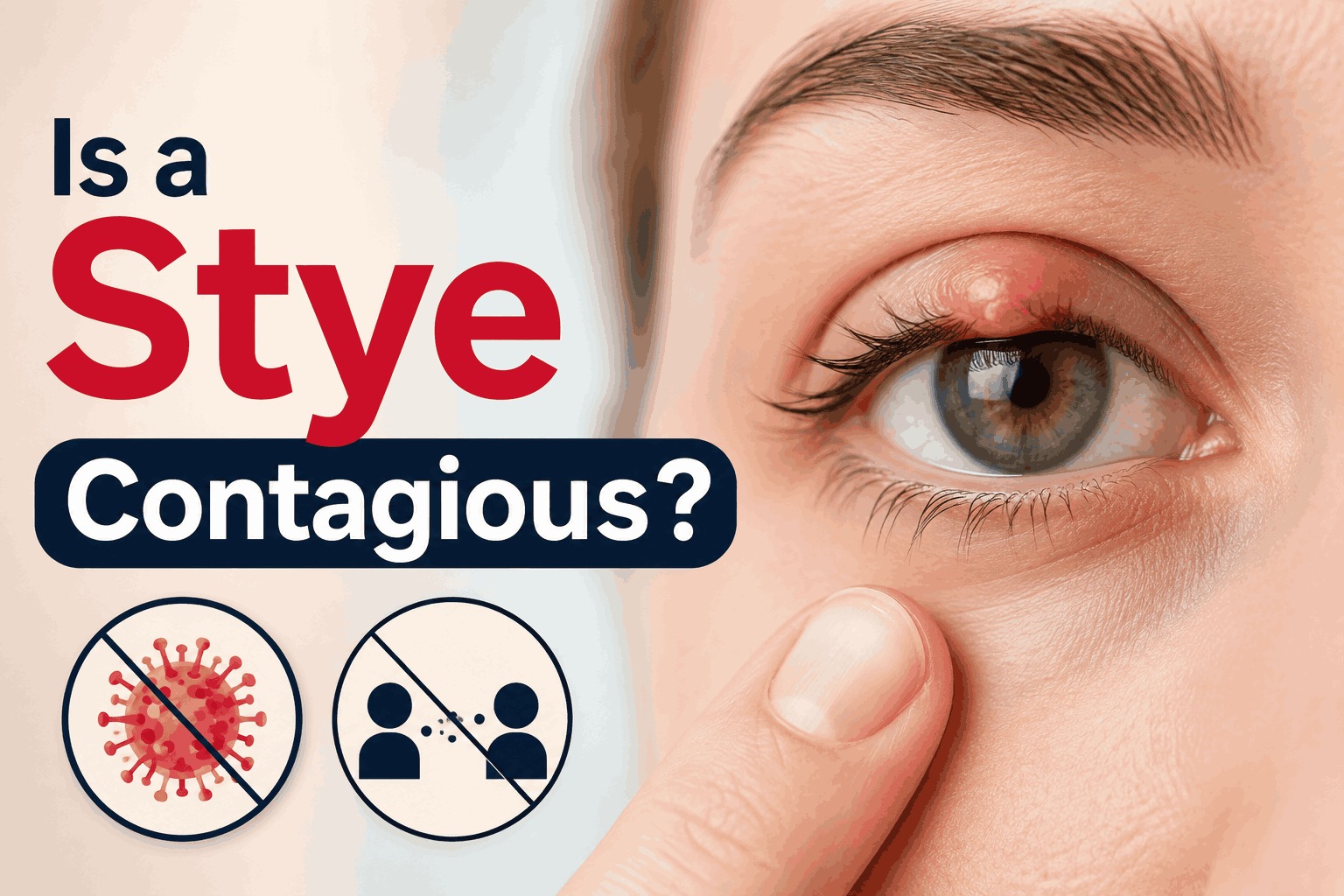
You wake up with a tender, red lump on your eyelid. Your first thought is probably about the pain. Your second thought, especially if you have family around, is likely: “Is a stye contagious?” The short answer from clinical practice is that direct person-to-person transmission is rare, but the bacteria causing the infection spreads very easily through contaminated hands or shared items. Let’s break down exactly what that means for your daily life.
What Exactly Is a Stye?
A stye is an acute bacterial infection clogging an oil gland along your eyelid edge. Clinically, we classify an external stye as an infection of the Zeis or Moll glands, while an internal stye points toward the deeper meibomian glands. Bacteria, specifically Staphylococcus aureus, multiply inside the blocked gland, and your body dispatches white blood cells to fight it. This immune response creates the pus-filled pocket you see as a yellowish head. The swelling feels hot and tender because inflammation draws blood flow to the battlefield.
The Board of the American Academy of Ophthalmology clarifies that these lumps are not cancerous growths and generally resolve without major intervention. The primary culprit, Staphylococcus aureus, lives harmlessly on intact skin but becomes problematic when it slips beneath the eyelid surface through a microscopic gland opening.
How Does a Stye Form in the First Place?
Glands ringing your eyelashes secrete oil to lubricate your eye surface. Dead skin cells, dirt, or solidified oil can cork a gland opening as tightly as a bottle stopper. Oil production continues inside the closed space, building pressure and feeding any trapped bacteria. The glands swell rapidly, often overnight, because the eyelid tissue is exceptionally loose and responsive to fluid shifts.
Poor lid hygiene usually sets the stage. Touching your eyes with unwashed hands deposits both debris and live bacteria directly onto the gland orifices. Because their eyelid margins are home to persistent bacterial colonies that create a biofilm shield against the body’s natural tear film defenses, people who suffer from blepharitis have a higher recurrence rate.
Is a Stye Contagious Through Direct Contact?
A stye does not leap between people through the air or a brief touch. The infection sits sealed inside a gland capsule, not exposed on the skin surface like a weeping wound. The danger emerges when the stye drains either naturally or through squeezing. Once that pus containing live Staphylococcus aureus reaches your fingertips, bed linens, or a borrowed washcloth, the bacteria can transplant to someone else’s eyelid margin.
The Centers for Disease Control and Prevention stresses that Staphylococcus aureus survives on dry surfaces like cotton towels for hours, creating an invisible bridge between an active infection and a new host. School policies rarely require exclusion for a stye because casual classroom contact carries negligible risk, but locker room towel sharing poses a genuine threat. The real communicable element is the bacteria-laden discharge, not the bump itself.
Can You Spread a Stye to Your Other Eye?
Autoinoculation happens far more often than passing a stye to another person. Rubbing the infected eye, then unconsciously touching the healthy eye gives bacteria a direct pathway. Sleeping on one side and flipping your pillow in the night can smear drainage across the fabric and into the opposite eye. Contact lens wearers face an elevated danger here; handling a lens after touching the stye bathes the new eye in contaminated solution.
Clinical records from the National Eye Institute indicate that patients who squeeze a stye spread the infection to their other eye within forty-eight hours at a statistically significant rate. Washing your hands before and after applying warm compresses protects both eyes equally well. Treat each eye as a separate sterile field in your daily routine until the infection runs its course.
What Symptoms Signal a Contagious Phase?
An intact, unruptured stye poses the lowest transmission risk. Warning signs that a stye is about to become contagious include a visible white or yellow central head that looks ready to burst, spontaneous oozing of clear or yellow fluid, or crusty eyelashes sticking together upon waking. Active drainage wicks bacteria directly onto whatever surface touches the eyelid next.
Pain often peaks right before drainage begins because fluid pressure stretches the gland capsule maximally. Once the stye drains, pain drops sharply, but this is precisely the window where contagion risk skyrockets. The improvement in discomfort tricks people into relaxing hygiene measures right when strict protocols matter most.
Why Do Some People Get Styes Repeatedly?
Recurrent styes signal an underlying imbalance in the eyelid microbiome. The most common condition is blepharitis, a chronic low-grade inflammation caused by bacteria that adhere to lash bases and develop resistant colonies.Rosacea, particularly the ocular subtype, inflames meibomian glands and thickens their oil secretions, making blockages statistically more probable. Uncontrolled diabetes depresses the immune barrier that normally clears transient bacteria from eyelid tissue.
Hormonal fluctuations during adolescence or perimenopause alter oil gland viscosity, turning normally free-flowing lipids into a thick sludge. Shared bathrooms in college dorms expose students to a rotating cast of community-acquired staph strains, some of which carry antibiotic resistance genes. A study published in the Journal of Clinical Ophthalmology found that patients with vitamin A deficiency show measurably slower corneal epithelial healing and higher stye incidence.
How Do Doctors Diagnose a Stye Accurately?
An eye specialist diagnoses a stye through slit-lamp examination revealing a tender, localized eyelid nodule pointing toward the lid margin. The doctor presses gently to assess fluctuance, which indicates a pus-filled center ready for drainage. A style that fails to point after several days or occurs on the inner eyelid surface may indicate a chalazion, which is a sterile blockage rather than an active infection and is not contagious at all.
Rarely, a sebaceous cell carcinoma masquerades as a recurrent stye in the same spot. The American Academy of Ophthalmology warns that any non-healing eyelid lesion deserves a biopsy, especially in older adults with a history of extensive sun exposure. Distinguishing between these entities determines whether antibiotics, incision, or oncologic referral becomes the next step.
Which Treatments Speed Healing and Stop Transmission?
Warm compresses remain the first-line treatment recommended by ophthalmologists. Use a clean washcloth soaked in water as hot as your wrist tolerates without scalding, and hold it against the closed eyelid for ten minutes, four times daily. The heat melts thickened oils and encourages the stye to drain spontaneously. Throw the cloth directly into the laundry after one use; never drape it on a shared towel rack.
Antibiotic ointments containing erythromycin or bacitracin work for styes that keep recurring or show excessive redness spreading beyond the nodule. The medication reduces surface bacteria load, trimming the window during which the stye might shed pathogens. Oral antibiotics enter the picture only when the infection spreads into surrounding facial tissues, creating preseptal cellulitis that threatens deeper structures.
Never attempt to lance or pop a stye at home. Squeezing forces bacteria backward into the cavernous sinus, a venous pathway leading directly to the brain. The American Academy of Ophthalmology records cases of intracranial infection traced to such at-home manipulation. Letting the stye rupture on its own timeline keeps bacteria moving outward, not inward.
What Prevention Strategies Work Best?
Preventing styes means controlling the bacterial load at your eyelid margin. Wash your hands thoroughly with soap and water before inserting contact lenses or applying skincare products near your eyes. Replace mascara and liquid eyeliner every three months because the tube becomes a reservoir for Staphylococcus aureus over time. Remove all eye makeup completely each night; sleeping in cosmetics clogs glands as effectively as pouring wax into a drain.
Daily lid hygiene wipes containing hypochlorous acid or tea tree oil reduce bacterial colonies in people with blepharitis. Using a clean towel every day and designating separate hand towels for each family member breaks the chain of cross-contamination. Sunglasses or protective eyewear outdoors shield eyelid glands from wind-blown debris that clogs gland openings.
When Must You See an Eye Doctor Immediately?
Seek urgent care if the swelling extends beyond the eyelid into the cheek or forehead, suggesting spreading cellulitis. Vision changes, including blurriness or double vision, warrant an emergency slit-lamp exam to rule out orbital involvement. A stye that fails to drain or shrink after two weeks of diligent warm compresses requires a small in-office incision under local anesthesia.
Fever combined with a swollen eyelid signals systemic spread, transforming a nuisance into a medical urgency. Patients who suffer recurrent styes in exactly the same spot need an ophthalmologist to exclude a hidden tumor masquerading as a benign bump. Waiting too long converts a simple drainage procedure into a complicated scar revision later.
FAQs
Can a stye spread through swimming pool water?
A properly chlorinated pool destroys Staphylococcus aureus rapidly, but the discharge from a draining stye can contaminate goggles or swim towels. Avoid swimming until the stye fully heals to protect others and prevent chlorine irritation from inflaming the sensitive eyelid tissue further.
Is a stye a sign of a weak immune system?
Isolated styes happen to perfectly healthy people after a transient hygiene slip. Frequent multiple styes, however, may indicate poorly controlled diabetes, chronic stress raising cortisol and suppressing immunity, or nutritional gaps needing evaluation by a primary care doctor.
Can I wear contact lenses with a stye?
Switch to glasses immediately upon noticing a stye. Contact lenses trap bacteria against the cornea, and any drainage from the stye contaminates the lens surface, turning it into a direct bacterial delivery system onto a pristine, vulnerable eye surface.
Does a stye leave a permanent lump?
Most styes drain and flatten completely within a week. A hard, painless residual nodule persisting beyond a month is a chalazion, which represents trapped oil that the body walls off. Chalazions are not contagious and often require a different steroid injection or excision treatment.
Can children attend school with a stye?
Yes, as long as the stye remains unruptured and the child understands not to touch or rub the eye. Teachers should know to send the child for hand washing after any accidental contact with the draining area. Covering the stye with a bandage is ineffective and traps moisture, worsening the infection.
Are stye ointments available over the counter?
Stye-specific OTC ointments and medicated pads exist in most pharmacies. Choose products containing bacitracin or mineral oil emollients rather than vasoconstrictors designed for redness relief, which do nothing for the bacterial cause and may dry the lid margin excessively.