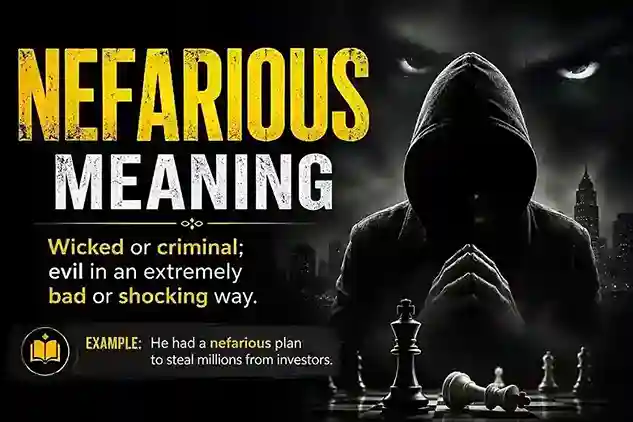
You’ve heard someone called “nefarious,” but does that just mean “bad,” or is there a sharper, darker edge? Guessing wrong can flatten your writing and cost you credibility. The fix is simple. This guide unpacks the precise nefarious meaning, its ancient roots, and the exact moments to use it for unforgettable impact. Let’s turn you into a word master right now.
The Core Definition of Nefarious
The nefarious meaning centers on actions or intentions that are utterly wicked, villainous, and often criminal. Merriam-Webster defines the word as “flagrantly wicked or impious.” That word “flagrantly” matters. A nefarious deed isn’t just a small mistake or a moment of weakness. It screams moral corruption and deliberate evil.
When you call a plan nefarious, you signal a deep violation of law, ethics, or trust. The term implies a knowing, calculated choice to do harm. You might describe a fraud scheme, a secret betrayal, or a hidden agenda that preys on the innocent. The nefarious meaning always carries a sense of secrecy and treachery, as if the evil operates in the shadows.
Tracing the Roots: Latin Origins of a Dark Word
Etymonline reveals that “nefarious” comes from the Latin nefarius, meaning “wicked, abominable, impious.” This breaks down into *ne-* (not) and fas (divine law, right). So something nefarious literally goes against what is sacred and lawful. The Romans used it to describe acts that defied the gods and the state alike.
English adopted the word in the early 1600s, and it kept that heavy judgment. That Latin heritage makes the nefarious meaning feel severe and almost ancient. It’s not slang; it’s a word that carries centuries of moral weight. Understanding this helps you see why you don’t use it for a child’s mischief. It belongs to acts that shock the conscience.
Nefarious vs. Evil: Why Precision Matters
“Evil” is a broad, catch-all term. The nefarious meaning, by contrast, points to specific, planned wickedness that operates through schemes and conspiracies. A natural disaster might feel evil, but it isn’t nefarious. A CEO who knowingly poisons a water supply for profit? That’s a textbook nefarious act.
Using the right word sharpens your message. If you call a politician’s vague policy “nefarious,” you sound like you’re exaggerating. Reserve it for actions with clear, sinister intent. The word works best when you expose a hidden, deliberate plan that harms others for personal gain. This precision makes your communication more powerful and trustworthy.
How to Use Nefarious in Everyday Speech (Without Sounding Forced)
You don’t need a throne and a cape to use the word naturally. The nefarious meaning fits modern life perfectly when you spot calculated dishonesty. Imagine a phishing email designed to steal your grandmother’s savings. That’s nefarious. A data broker secretly selling your location history to stalkers? Equally nefarious.
Here are the conditions that make the word click:
- The act is intentional, not accidental.
- There’s an element of secrecy or plotting.
- The motive is selfish, cruel, or destructive.
- The scale often involves breaking a serious trust or law.
Avoid applying it to minor frustrations. A slow Wi-Fi connection is annoying, not nefarious. Save the word for moments that genuinely warrant a charge of underhanded villainy.
Examples of Nefarious in Sentences
Seeing the word in action locks in the nefarious meaning. These examples span different contexts to show its range.
- The whistleblower revealed the company’s nefarious scheme to hide toxic waste in public parks.
- Her seemingly friendly advice concealed a nefarious attempt to sabotage my career.
- The cult leader’s nefarious control over his followers left scars that took years to heal.
- A nefarious alliance between the cartel and corrupt officials kept the city in fear.
- Cybersecurity experts uncovered a nefarious plot to crash the power grid during the storm.
Each sentence underscores hidden, extreme wrongdoing. The word doesn’t just describe the act; it condemns it.
Synonyms and Antonyms of Nefarious (With Handy Table)
Choosing a synonym often sacrifices precision. The table below helps you navigate related words while honoring the exact nefarious meaning.
| Synonym | Shade of Meaning | When to Use Instead of Nefarious |
| Villainous | Wicked like a storybook antagonist | For bold, dramatic wrongdoing in fiction |
| Heinous | Shockingly evil; emotionally revolting | For crimes that cause widespread horror |
| Iniquitous | Deeply unfair and morally wrong | For systemic injustice or gross inequality |
| Perfidious | Treacherous, betraying trust | When the core sin is betrayal specifically |
| Diabolical | Devilishly cunning and cruel | For plans showing clever, evil inventiveness |
| Nefarious | Wicked and criminal, often secret and plotted | The best all-rounder for covert, extreme evil |
Antonyms include virtuous, honorable, righteous, and scrupulous. Where nefarious acts hide, virtuous deeds stand openly in the light.
Nefarious Characters in Literature and Film
Fiction thrives on the nefarious meaning. Shakespeare’s Iago from Othello embodies it. He doesn’t just dislike the Moor; he orchestrates a sadistic, secret campaign to destroy him out of envy. Iago’s plotting, his whispered lies—all are nefarious to the core.
Modern stories offer rich examples too. In Breaking Bad, Walter White’s transformation from a desperate teacher into a drug kingpin hinges on one nefarious decision after another. He poisons a child, manipulates his partner, and builds an empire on misery. These characters remind us that the most dangerous evil often wears a familiar face and operates from the shadows.
What Drives Nefarious Behavior? A Psychological Glimpse
Psychology gives us tools to understand why people commit nefarious acts. A landmark study published in the Journal of Personality and Social Psychology (2019) linked the “Dark Triad” traits—narcissism, Machiavellianism, and psychopathy—to calculating, exploitative behavior. Such individuals show a chilling ability to see others as tools, not people.
That clinical insight matches the nefarious meaning perfectly. The word fits those who plan harm without empathy, who sleep soundly after swindling millions. It’s not about impulsive rage; it’s about cold strategy. Recognizing this pattern helps you spot toxic personalities before they strike.
Nefarious in Law, Politics, and Media
Legal and political language borrows the nefarious meaning to condemn systematic corruption. When prosecutors describe a criminal enterprise, they detail nefarious conduct that goes beyond a single crime. Watergate, for example, wasn’t just a burglary; it was a nefarious web of espionage, cover-ups, and abuse of power.
Journalists use the word sparingly to signal the gravest ethical breaches. An investigation might uncover a nefarious lobbying network that wrote laws for its own profit. In these high-stakes arenas, the word functions as a moral alarm. It tells citizens that the betrayal is not casual—it’s foundational.
Memory Tricks: How to Never Forget the Nefarious Meaning
Anchor the word with a simple image. Picture a masked figure whispering a secret plan in a dark alley, holding a signed contract with the devil. The mask hides the face; the whispering captures the secrecy; the contract represents the deliberate, binding evil. That’s the nefarious meaning in a single mental snapshot.
You can also use a word-play bridge: “nefarious” sounds like “never fair to us.” Something nefarious is never fair; it cheats and destroys under cover. Say it aloud: “That scheme is never fair to us.” The phonetic hook keeps the core meaning alive in your mind forever.
Frequently Asked Questions About Nefarious Meaning
What exactly does nefarious mean?
It describes an act or person so wicked and criminal that the evil is obvious, deliberate, and often hidden from public view.
Can a person be nefarious, or only an action?
Both. You can say “a nefarious villain” or “a nefarious plot.” The word describes the character of a person or the nature of a deed equally well.
Is nefarious stronger than evil?
Not stronger, but more specific. Evil covers a wide spectrum; nefarious zooms in on calculated, often secret criminality.
What is the best synonym for nefarious?
“Villainous” comes close, but “nefarious” adds the layers of plotting and illegality. For precision, no synonym captures the full package.
How do I use nefarious meaning in a sentence naturally?
Place it before the word “plan,” “scheme,” or “agenda” to expose hidden corruption: “The auditor discovered a nefarious scheme to drain pension funds.”
Does nefarious always imply a crime?
It implies a serious violation of law, ethics, or sacred trust. The line between extreme immorality and actual illegality often blurs when the word applies.