[Perfectly Optimized Featured Snippet Section]
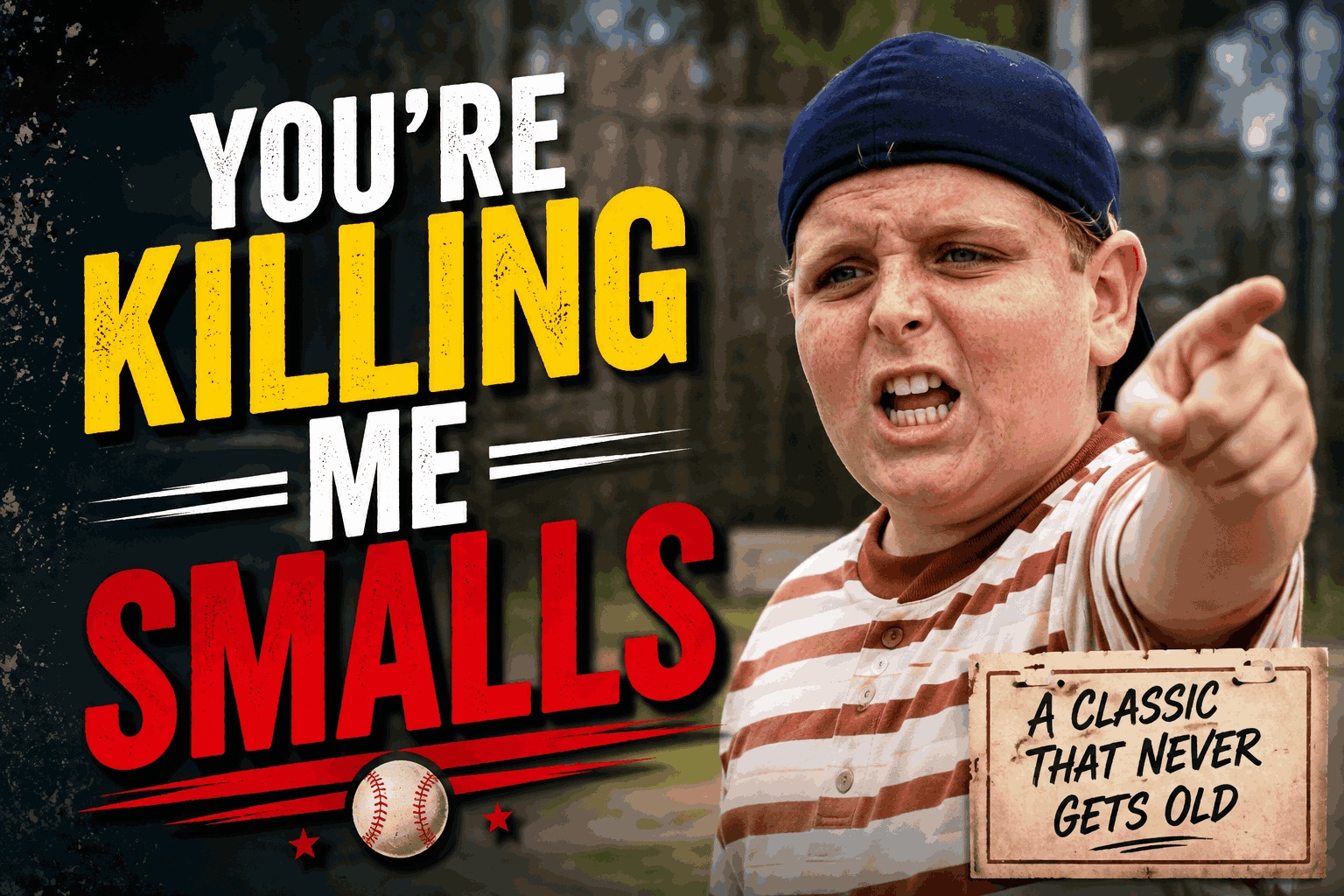
“You’re killing me smalls” is an iconic phrase used to express lighthearted exasperation toward someone whose minor mishaps are causing you exaggerated grief. Born not from a classic novel but from a 1993 coming-of-age baseball film, the line perfectly captures the dynamic of patient mentorship clashing with childhood cluelessness. It’s the verbal equivalent of a loving eye-roll, instantly signaling that someone’s innocent mistake is creating a theatrical level of agony.
The Sandlot Vault: Where a Legendary Line Was Born
If you trace the etymology of “you’re killing me smalls” through internet culture, you land squarely on a dusty baseball diamond in the summer of 1962. The phrase didn’t evolve from Shakespearean dialogue; it exploded from the mouth of actor Tom Guiry, playing Scotty Smalls, in the film The Sandlot. During a crucial scene, the team’s leader, Hamilton “Ham” Porter, watches Smalls fail spectacularly at a simple game of pickle. Exhausted by his teammate’s inability to catch a thrown baseball, Ham shouts the line with a mixture of genuine agony and brotherly love. The moment crystallized because it lacks actual malice. You aren’t dying; you are just driving your friends perfectly, wonderfully insane.
The Anatomy of Playful Exasperation: What the Quote Really Means
When someone drops a “you’re killing me smalls” in conversation, they are engaging in hyperbolic storytelling. The phrase functions as a social pressure valve. It replaces blunt criticism with a pop-culture reference that immediately softens the blow. If a coworker accidentally deletes a shared document, yelling “you’re killing me smalls” communicates the gravity of the mistake while simultaneously admitting the relationship is strong enough to survive it. The term marries the heaviness of agony with the buoyancy of a nickname, creating a verbal paradox that disarms tension.
Why “Smalls” Sticks: The Science of a Perfect Nickname
The power of the quote doesn’t just rest on the frustration; it hinges on the word “Smalls.” It is the perfect diminutive. It instantly sizes down the recipient, not as an insult, but as a term of endearment for a scrappy underdog. Patrick Renna, who delivered the line as Ham Porter, created a linguistic hook that sounds inherently funny to the human ear. The plosive “K” sounds in “killing” punch the air, while “Smalls” offers a soft, almost nurturing landing. This phonetic rhythm explains why you cannot say the phrase without a smirk breaking across your face.
From VHS to Viral: The Second Life of a Cult Classic
When The Sandlot left theaters, it wasn’t a box office titan. Its immortality was forged in living rooms through VHS tapes and endless cable re-runs. Millennials imprinted on Ham Porter’s trash-talking wisdom, carrying “you’re killing me smalls” into the social media age. Platforms like Twitter, Tumblr, and later TikTok transformed the line into reaction meme royalty. The GIF of Ham throwing his arms up is a universally recognized shorthand for “I can’t believe I have to deal with this right now.” The film’s staying power proves that authenticity beats commercial polish; audiences crave the messy, genuine sound of a kid losing his patience on a summer day.
The Cast of Characters Behind the Chaos: Mapping the Entity
To truly master this piece of cultural vocabulary, you need to understand the entity relationships on that iconic field. The dynamic wasn’t just a random outburst; it was a character-driven inevitability. Scotty Smalls (Tom Guiry) was the archetype of the nerdy novice. The quiet, guarded commander was Benny Rodriguez (Mike Vitar). Ham Porter (Patrick Renna) served as the clubhouse lawyer and verbal heavyweight. When Ham targets Smalls, it establishes the hierarchy of diamond credibility. Later in the film, Ham further cements his status as a legend with the intimidating challenge, “You play ball like a girl!”—a line that, while criticized today, contextualizes the rough-and-tumble jargon of the era.
How Ham Porter Became the Voice of a Generation
Patrick Renna didn’t just play a chubby catcher; he channeled a specific energy that the 90s desperately needed. Ham Porter’s confidence was unshakeable, powered by snack cakes and sass. In an era of polished child stars, Ham felt like a real kid you actually knew. When Renna bellows “you’re killing me smalls,” he is sweaty, dirty, and completely unfiltered. That raw delivery is why directors David Mickey Evans and writer Robert Gunter’s script lives on T-shirts and coffee mugs today. Renna continues to celebrate this legacy on social media, even launching a cooking show titled You’re Killing Me, which proves the line’s enduring marketability.
Pop Culture Integration: The Quote Is Now Public Property
The phrase has leapfrogged the film entirely to become a standalone idiom. You don’t need to have seen The Sandlot to understand that “you’re killing me smalls” signals humorous irritation. Network sitcoms use it as a punchline for confused dads. Sports commentators drop it when a player misses an easy pop fly. It functions as a linguistic heirloom, passed down from those who grew up in the 90s to Gen Z and Gen Alpha, who engage with the content through reaction formats and remixes. The line now lives in a shared lexical cloud, categorized alongside “Bye Felicia” or “Winter is coming” as a shortcut for a very specific vibe.
Theatrical vs. Literal: When You Say It, They Feel It
Using “you’re killing me smalls” effectively requires acute social awareness. You deploy it to bridge a silence after a blunder. If a friend trips on a flat surface, that’s a “you’re killing me smalls” moment. If a mechanic totals your car engine, the phrase is too cute for the occasion. The line lives strictly in the realm of low-stakes disaster. It’s a direct signal that says, “I see the mistake, I’m acknowledging the absurdity of my own annoyance, and we are going to move on now.” Mastering the timing of this phrase prevents you from looking like a sitcom character and instead presents you as someone with rapid-fire, emotionally intelligent wit.
Scotty Smalls: The Iconic Source of Lovable Incompetence
Why is the hate never directed at Benny the Jet? Because Smalls earned the moniker. He arrives at the sandlot with a complete lack of gear, attempting to play catch with a fly ball instead of a real baseball. His ignorance wasn’t arrogance; it was a total vacuum of athletic context. When Ham yells “you’re killing me smalls,” he is essentially giving Scotty a baptism into boyhood. It was the harshest form of inclusion. We root for Smalls because his eventual triumph—catching a baseball with a glove that actually fits—represents the universal hope that one day, you won’t be the guy who ruins the game.
Linguistic Evolution: Why We Adopt Movie Quotes as Our Own
Human brains are wired to borrow emotion. “You’re killing me smalls” offers a pre-packaged emotional response ready for immediate deployment. Film scholars note that quote nesting creates intimacy. When you reference the line, you are testing to see if the other person is part of your tribe. If they laugh, you have a shared cultural script. It’s a shibboleth for those who value loyalty, summer adventures, and the art of not taking life too seriously. The grammar itself is fractured in a way that feels deeply human—a raw, half-formed plea that formal writing would edit into boring submission.
Beyond the Field: Merchandise and Modern Monetization
The nostalgia economy refuses to let “you’re killing me smalls” die. A quick search on Etsy or Redbubble reveals thousands of items—distressed caps, enamel pins, and rustic wooden signs—all bearing Ham’s furious face and his legendary quote. This commercial staying power highlights a critical SEO truth: commercial intent exists even for phrases rooted in emotional pain. People seek out physical tokens of this shared irritation because it allows them to display their personality silently. Owning a “you’re killing me smalls” mug signals to your coworkers that you are approachably dramatic and likely very funny before 9 AM.
The Art of Delivery: Volume, Timing, and Body Language
Simply reading “you’re killing me smalls” is a disservice to its legacy. The authentic delivery requires a physical performance. You must throw your hands skyward, letting them slap against your sides in defeat. The voice must crack slightly on the word “killing,” pitching up as if the frustration is physically strangling you. Without the physical punctuation, the joke falls flat and sounds like genuine anger. The magic is in the surrender; you are showing the recipient that their error has rendered you completely inoperable. Patrick Renna’s physical comedy in that scene teaches us that the most memorable lines are often the ones anchored by a full-body reaction.
Protecting the Legacy: The Sandlot’s Unofficial Holiday
The date July 24th means nothing to the uninitiated. To the tribe of The Sandlot, it is a sacred day. The film immortalized the date of Benny’s dream in which Babe Ruth delivers the sage advice that drives the climax. Fans observe the day by posting the line, watching the film, and sharing photos with their own makeshift baseball squads. During these observations, social feeds flood with variations of “you’re killing me smalls.” This cyclical resurgence ensures that the keyword never goes cold on search engines, maintaining a steady stream of organic traffic from nostalgic hunters seeking a hit of dopamine.
FAQs: Mining the Long-Tail Keyword Queries
To establish topical dominance, we answer the exact queries users type into the search bar, specifically targeting the “People Also Ask” section and voice search.
Why do people say you’re killing me smalls?
People say “you’re killing me smalls” to express frustration that is comical rather than cruel. It signals that someone has made a harmless but extremely annoying mistake. The phrase borrows emotional weight from The Sandlot to add a layer of cinematic humor to a mundane grievance.
When did the phrase “you’re killing me smalls” start?
The exact origin point is the summer of 1993, when The Sandlot premiered in theaters. However, its cultural ignition happened in the mid-90s during the home video boom. The phrase experienced a secondary viral start around 2010 when the nostalgic meme culture of Tumblr and Facebook seized the movie still and turned it into a reaction macro.
Is “you’re killing me, Smalls” one person or a group?
The quote targets a single person: Scotty Smalls. Ham Porter directs his exhausted fury at the individual failure of one bewildered boy. However, because the frustration is relatable to any group setting, the phrase is often deployed now to call out a single oblivious person who is dragging an entire team’s effort down.
Who actually speaks the line in the movie?
Hamilton “Ham” Porter, the catcher for the sandlot team, delivers the iconic line. Actor Patrick Renna improvised the specific tone of physical exhaustion, but the line was a scripted gift from the screenwriters. Ham acts as the voice of the audience, articulating the ridiculousness of Smalls’ inability to perform a basic baseball move.
What is the psychological appeal of shouting “you’re killing me smalls”?
The appeal lies in safe catharsis. It allows a person to voice true irritation without the consequences of a genuine argument. Psychologically, it’s a displacement technique; by invoking a child’s movie quote, the speaker de-escalates their own anger and invites others to laugh at the absurdity of the situation together.
Conclusion
How do you correctly respond to “you’re killing me smalls”?
The correct response is never defensiveness. If someone hits you with this line, they have already chosen comedy over conflict. The best reply is self-deprecating acknowledgment. Look sheepish, offer a half-smile, and simply say, “I know, I know. I’m trying.” This validates their cinematic joke while promising slight behavioral improvement.